A patchwork of laws and regulations on kratom has left consumers understandably confused.
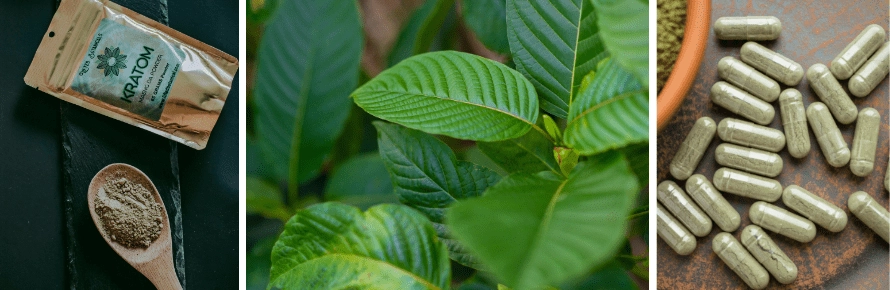
Wondering if you can buy, use, or travel with kratom? The patchwork of kratom laws in the United States can confuse anyone. It’s banned in some states, sold in gas stations in others. Here’s information to help guide you through the kratom legality maze.
In This Article
- What Is Kratom, and Why Is It So Popular?
- Is Kratom Legal in the U.S.?
- Can You Travel With Kratom?
- What Is the Kratom Consumer Protection Act?
- Are There Federal Regulations on Kratom?
- Is Kratom Safe?
- What’s Next for Regulation of Kratom, 7-OH, and Mitragynine?
- Resources on Kratom Legality, Regulations, and Scientific Studies
- When to Speak With a Lawyer
What Is Kratom, and Why Is It So Popular?
Kratom is a tree native to parts of Southeast Asia that belongs to the coffee family. It’s not an opioid, but its two main compounds—mitragynine and 7-hydroxymitragynine (7-OH)—interact with the brain in ways people say help with pain, mood, and withdrawal symptoms. In the United States, most people use it in powder, capsule, or concentrated forms (rather than in its natural leaf state). Kratom products became popular in the U.S. in the early 2020s. Where permitted, retailers sell kratom products online and in convenience stores, supplement stores, and smoke shops. Many people have turned to kratom products to self-manage pain or to increase energy and performance. Its similarity to opioids, though, has made it a target.
Is Kratom Legal in the U.S.?
Kratom is legal in most of the United States, although an increasing number of states prohibit sales of certain synthesized, adulterated, and boosted kratom products. Only a few states completely ban the possession and sale of kratom.
States That Ban Kratom
The six states that ban kratom (as of November 2025) include:
| Alabama | Indiana | Wisconsin |
| Arkansas | Louisiana | Vermont |
With the exception of Vermont, these states have banned the possession, sale, and manufacturing of kratom products by scheduling mitragynine and 7-OH as Schedule I drugs. Vermont made these products “regulated drugs.”
Possession penalties are usually misdemeanor-level or fine-only offenses. Illegal sales and manufacturing of kratom products, however, can expose a person to felony charges.
States That Regulate Kratom Products
Many states have started regulating kratom products. Most prohibit the sale of synthetic kratom products, products containing more than 1% or 2% of 7-OH, and adulterated kratom products.
According to the American Kratom Association, states with kratom regulations include:
| Arizona | Mississippi | South Carolina |
| Colorado | Nebraska | South Dakota |
| Florida | Nevada | Texas |
| Georgia | Oklahoma | Utah |
| Kentucky | Oregon | Virginia |
| Maryland | Rhode Island | West Virginia |
Most of these laws penalize retailers and producers for consumer protection violations.
Local Restrictions on Kratom Products
Local bans on sales and possession of kratom may also exist in various cities and counties. For instance, San Diego prohibits the possession and sale of kratom products. A violation carries misdemeanor penalties.
Can You Travel With Kratom?
You can travel with kratom through states where it’s not banned. But remember to check local regulations as well.
States that regulate kratom products typically prohibit sales of certain products but don’t have bans on possession. So, even in many of the regulated states, you could still travel with kratom products.
What Is the Kratom Consumer Protection Act?
Many of the states that regulate kratom have done so by passing versions of the Kratom Consumer Protection Act. These laws commonly set rules, such as:
- age restrictions—banning sales to people younger than 18 or 21
- marketing restrictions—prohibiting marketing that targets kids
- potency restrictions—limiting sales of kratom products to those that don't contain more than 1% or 2% 7-OH (of the total alkaloid content)
- product restrictions—prohibiting producing or selling adulterated kratom products containing controlled substances, semi-synthesized alkaloids, or synthesized alkaloids
- labeling requirements—showing what’s in the product, how much, who made it, plus warnings on side effects, and
- mandatory quality testing—monitoring for contaminants, pesticides, heavy metals, solvents, and controlled substances.
The American Kratom Association also created voluntary industry guidelines that set Good Manufacturing Practice (GMP) standards for testing, labeling, packaging, and distributing kratom products.
Are There Federal Regulations on Kratom?
Federal agencies are keeping tabs on kratom, but so far, it’s not regulated at the federal level. In 2016, there was a push to make it a Schedule I controlled substance, but that effort didn’t get far. The Food and Drug Administration (FDA) has not approved kratom as a drug product, dietary substance, or food additive. The Drug Enforcement Agency monitors kratom as a “drug and chemical of concern.”
Is Kratom Safe?
That is the million-dollar question, as scientific research on kratom is just starting to catch up with its increasing popularity.
The current science suggests that natural kratom has a low risk for addiction and few serious side effects (mostly digestive-related and associated with higher doses). But little else is known.
Those who want tighter restrictions on kratom often point to:
- lack of research on how kratom interacts with other legal and illegal substances
- possible health risks from taking high-potency or synthetic kratom products (for instance, several producers have boosted the 7-OH content far higher than what's found in the natural plant), and
- concerns about adulterated and contaminated products being sold to consumers (check out voluntary recalls for Salmonella contamination and FDA testing on heavy metals in kratom).
It’s advisable to talk to a healthcare provider before taking kratom.
What’s Next for Regulation of Kratom, 7-OH, and Mitragynine?
Currently, there’s a strong push for federal regulatory oversight of kratom products. While some states have gone the route of banning kratom, more have taken the regulatory approach. Having federal regulations would arguably assist states and consumers by providing uniform standards for production and marketing. It may also reduce the stigma around kratom and hopefully lead more consumers to discuss it with their doctors.
Resources on Kratom Legality, Regulations, and Scientific Studies
As mentioned above, the legality of kratom varies by state and, even, by city or county—so you need to confirm what the law is at each level. State legislation in this area has been increasing, so it’s also important to stay on top of new laws and regulations. Some helpful resources include:
- AKA: Kratom State Legality and Legislation
- State Health Departments
- Congressional Research Report—Kratom Regulation: Federal Status and State Approaches (2023)
- DEA Factsheet on Kratom
- FDA and Kratom
- National Institute on Drug Abuse: Kratom
The science on kratom also keeps advancing. Here are scientific studies published as of the writing of this article. Continue to look for new studies.
- Reported Associations Between Kratom and Seizures: A Systematic Review (Oct. 2025)
- Kratom Safety and Toxicology in the Public Health Context (June 2024)
- Kratom Science Update: Evidence-Based Facts (Dec. 2023)
- Understanding Kratom Use: A Guide for Healthcare Providers (Mar. 2022)
- Kratom Use in the US (Dec. 2021)
- Clinical Pharmacology of the Dietary Supplement Kratom (Nov. 2021)
When to Speak With a Lawyer
Anyone facing criminal charges for possessing, producing, or selling kratom should speak with a criminal defense lawyer or ask for a public defender.
If your business produces or sells kratom products, consult a business law attorney who can help you navigate state and local regulations.
(Ala. Code § 20-2-23 (banned); Ariz. Rev. Stat. §§ 36-795.02, 36-795.03 (regulated); Ark. Code § 5-64-201 (banned); Colo. Rev. Stat. §§ 6-1-740, 18-13-132 (regulated); Fla. Stat. § 500.92 (regulated); Ind. Code §§ 35-31.5-2-321, 35-48-2-4 (g) (banned); La. Rev. Stat. §§ 40:966.1; 40:989.2 (banned); Okla. Stat. tit. 63, § 1-1432.1 (regulated); Tex. Health & Safety Code ch. 445 (regulated); Utah Code §§ 4-45-101 and following (regulated); Vt. Code R. § 23:7.0, Vt. Stat. tit 18, § 4205 (banned); Wis. Stat. § 961.14 (banned); San Diego Mun. Code §§ 12.0201, 52.3301 to 52.3308 (banned) (2025).)

In This Article
- What Is Kratom, and Why Is It So Popular?
- Is Kratom Legal in the U.S.?
- Can You Travel With Kratom?
- What Is the Kratom Consumer Protection Act?
- Are There Federal Regulations on Kratom?
- Is Kratom Safe?
- What’s Next for Regulation of Kratom, 7-OH, and Mitragynine?
- Resources on Kratom Legality, Regulations, and Scientific Studies
- When to Speak With a Lawyer